

Soulmaker: Sydney’s sound system roots
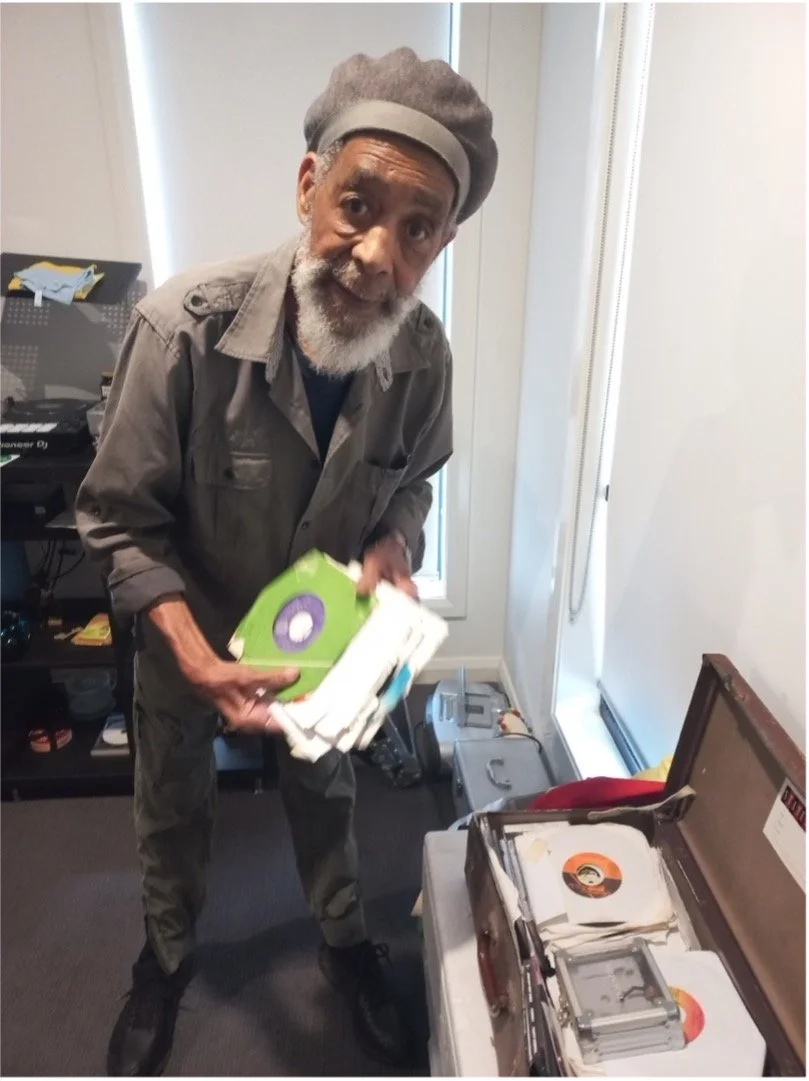
Image: by Brent Clough.
John ‘JJ’ Roberts is a Jamaican, born in the parish of St.Catherine. Nowadays he lives in Enfield, Western Sydney. If reggae in Australia is to have a mythological originator it could well be him.
After migrating from Jamaica and living for a period in the late 1960s and early 1970s in the London he met his wife-to-be, Cheryl, an Australian. They made the trip to Australia in 1972 and Roberts arrived in Sydney, a city which, for him, had “no music, nothing at all”. Facing a palpable cultural void he decided to “put something together like a sound system and take it out to the people.”
In many respects the fact that Roberts was not a musician but a ‘sound man’ parallels the history of the development of reggae in Jamaica and the Jamaican diaspora. As well as the remarkable innovations of Jamaican songwriters, musicians and producers, the principal means of propagation of Jamaican post-war music has been via the sound system. Jamaican ‘sounds’ were never simply a medium for diffusion of the music - they were a social and economic hub for poor communities whose avid responses to the locally recorded music through dance styles and popular acclamation were essential determinants of new styles and sonic techniques.
The slow adoption of reggae in Australia, based on the model of Bob Marley and the Wailers in their ‘international’ late 1970s period privileged the (rock music-derived) role of the band. The sound system as a vital part of international reggae culture was barely evident in this country for many years after JJ Roberts arrival. He carried beloved memories of sound system dances in England which spurred his decision to create his own ‘sound’ in Sydney:
“[In the UK] I worked a bit on sounds but I didn’t really own a sound, I was more listening [to them]. I listened to Jah Shaka from South East London and Sir Coxsone [International, who] was the champion in those days. From the Midlands even – the sound that played at my wedding, Lord Kali. Duke, Sonny and King Aly, great guys dealing with sound systems.”
Roberts had an enthusiasm for socially-aware, Black-conscious, Rastafari-oriented reggae which was in the ascendancy by the early 1970s and which was entirely absent from Australian airwaves or live venues.
“In those days [in England] there was rocksteady and reggae and dub and a bit of ska. But my thing was reggae, cultural lyrics. That sort of music hadn’t been heard here, it was unknown.”
Once he decided to build his own ‘set’ Roberts faced the first of many hurdles: the unfulfilled desire to secure an amplifier capable of delivering the minimum volume and frequency response a sound in England or Jamaica would normally utilise. After receiving turntables from his brother in England and building several speaker boxes, he tried to have an amp built.
“It was a problem to get someone to make it. I wanted something for 200 watts and I was told I only needed 40 watts per channel. So, although I had the money to buy an amplifier, I just couldn’t get it built. There was a lot of delay until I was able to find someone who was prepared to make it. It was a valve amplifier – 250 watts.”
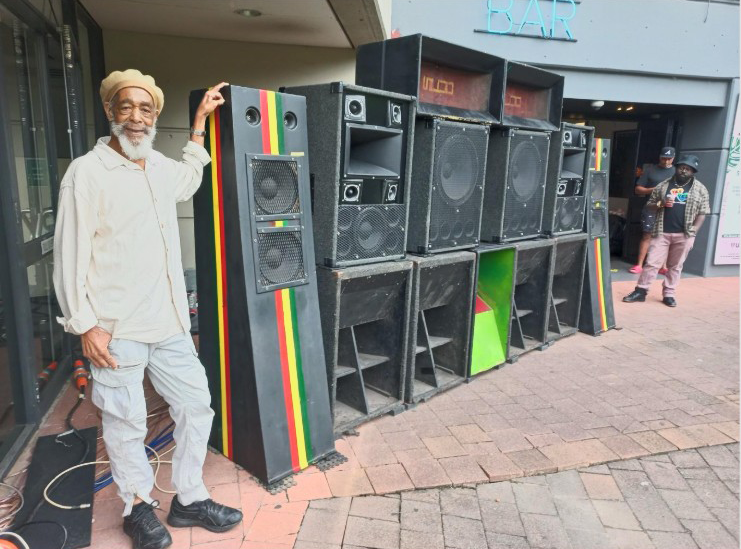
Image 2: by Brent Clough.
Once the system which had been named Soulmaker was ready a regular supply of fresh records from his brother in England had been arranged, Roberts began looking for work. His first gig in 1972 was a 21st birthday party in Oatley in Sydney’s southwest. After being transported to the event by his father-in-law and laboriously setting up the equipment, Roberts selected his first three tracks, all reggae, one of which was the lewd ‘Big Nine’ (part of series of ‘answer’ records to Jamaican Prince Busters 1969 “obscene undergound hit”, ‘Big Six’) by the white English ‘toaster’, Judge Dread. Trying to anticipate Anglo-Australian enthusiasm for a rude reggae ditty by an English-sounding artist proved disastrous.
“They weren’t interested in that. They were more interested in Creedence Clearwater Revival, Led Zeppelin and many others like that. I was told that they’ve got better stuff there which they want to listen to – so it was a bad experience for my first gig.”
Bewilderment and racist anger were the most noticeable responses to Roberts’ succeeding attempts to introduce Sydney audiences to reggae.
“Many times I’ve done gigs after which I was told that “we don’t want to listen to this coconut music”. It was classed as “coconut music.””
Though it was rarely a straightforward path from early rejection to grudging acceptance and eventually, to warm embrace of Jamaican popular music in Sydney, JJ Roberts and his Soulmaker sound system has stuck around for over fifty years and grown to be a substantial assemblage of speaker boxes and amplifiers. It has also become a family business with sons, Danny and Jono becoming members alongside numerous other technicians, selectors, MCs and publicists who’ve contributed to its still barely known role in Australian musical history.
The crew continues to ‘play out’, albeit sporadically. Guided by JJ Roberts staunch Rastafarian faith and his belief in the uplifting powers of ‘conscious’ Jamaican music, Soulmaker has created a reputation as a sonic pioneer, making once reviled “coconut music” heard via a big custom-designed PA a foundational element in the efflorescence of sound system activity in Australia in the 21st century.
Bio Brent Clough is a music researcher, DJ, and radio producer who has a long first-hand involvement in reggae sound system activity in Australia, Aotearoa New Zealand, and Vanuatu as well as documenting the various 'scenes'. He has a particular interest in the diffusion and adaptation of Jamaican music, idioms and ideas in Australia and Oceania.
This work is licensed under CC BY-NC-SA 4.0
Attribution: Clough, B. (2026). Soulmaker: Sydney’s sound system roots. Beats + Bass Cultures Network. https://beatsnbasscultures.org/new-blog-1/soulmakernbspsydneys-sound-system-roots