

Network Founder Introduction: Moses Iten
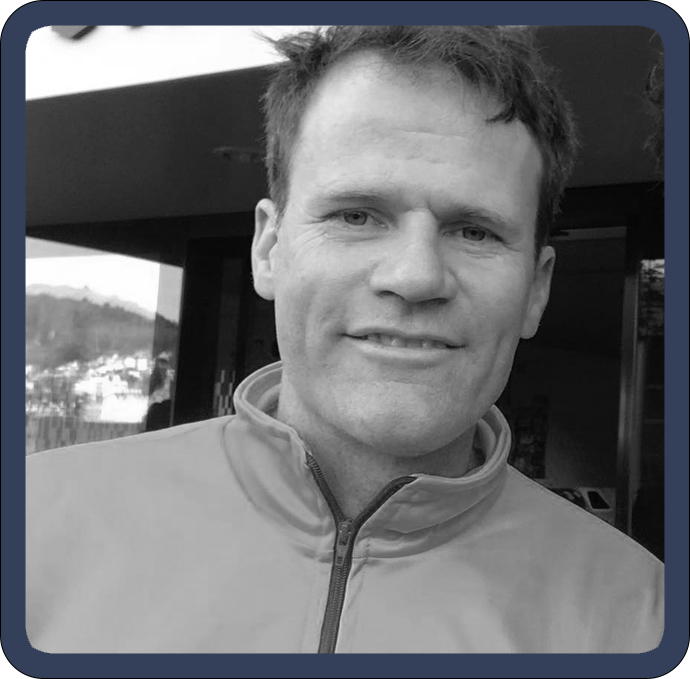
Who are you and what’s your connection to Beats and Bass Cultures?
I’ve been a DJ/producer for two decades and that experience is reflected in my research and teaching. I currently teach event management at Deakin University’s School of Business and am the Managing Editor of Dancecult: Journal of Electronic Music and Dance Culture. While my initial connection to beats and bass cultures began through involvement in hip hop, my passion for cumbia music led me to become fully embedded in sound system culture. Research, teaching and creative expression have always been interlinked for me.
Like so many 1980s and 90s kids, I engaged with music making cassette mixtapes. These were a way of choosing my own soundtrack as a migrant kid from a non-English speaking background living in rural Tasmania. After high school I backpacked around Europe for a year, where being exposed to a huge variety of music resonated with my own culturally mixed identity. For example, the multilingual track ‘Tabula Rasa’ (1998) by Mellowbag & Freundeskreis feat. Mr. Gentleman connected the US hip hop influence with the German language, African diaspora and Jamaican reggae. In this way, hip hop was the initial thread connecting my growing music collection, as I sought out recordings in different languages and with samples that made me dig further. Any type of music could be mixed by the DJ, as any recordings could open up new cultural universes, especially in a time before the internet became ubiquitous.
My world really changed when after my travels in Europe, still a 19-year old country kid, I decided to go and study in Sydney. There I got involved with the local hip hop scene which started with doing a university project on Aboriginal hip hop, which led to meeting and hanging out with the rapper Wire MC, who had grown up in Bowraville, Gumbaynggirr nation. Hip hop to him was existential and he told me:
“This is my lyrical healing. I can’t go and get scarred any more and I can’t become a traditional man. I’m a modern day blackfella, this is still Dreamtime for me. Hip hop is the new clapsticks, hip hop is the new corroboree.”
With Wire, I remember feeling the rush of being in a cypher, although myself not having the courage to spit rhymes. Nevertheless, I was hugely inspired and felt deeply connected to these courageous people coming to terms with themselves—and societal injustice—through artistic expression. When I got an article based on my Aboriginal hip hop research published in a prominent music magazine, I found myself invited to become a radio broadcaster and DJ with SBS Radio’s ‘Alchemy’ program. There I advocated for rappers like Wire MC to be featured on national radio and selected tracks from the hundreds of CDs of Latin American music I’d collected during a year as a student living in Mexico, where I had I worked on (another) research project that allowed me to hang out with local rappers, folk musicians and even some rockstars. Inevitably, my growing music collection got me invited to DJ beyond the radio in community events, bars, clubs and festivals, where I discovered my love for selecting music to incite dancefloors.
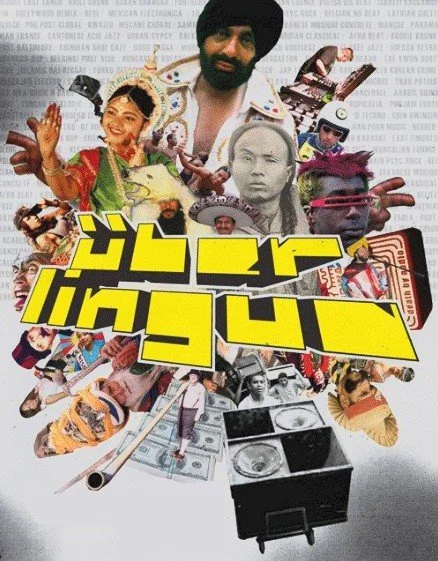
In the mid-2000s I made Melbourne my base, putting my energy into putting on events with the Uber Lingua crew and doing my apprenticeship as regular support DJ for my favourite bands. These included Combat Wombat, Curse Ov Dialect and Miso, whose producer Thomas “Soup” Campbell encouraged me to produce music and we co-founded the Cumbia Cosmonauts project. While the Mexican sound system cumbia was my primary inspiration, we shared a love for experimenting with fusions of folk and electronic music and playing with genre conventions. I learnt about the studio as an instrument as pioneered by some of our dub heroes like Lee Scratch Perry and Augustus Pablo. I have instigated, hosted and performed in hundreds of events all over the world in diverse spaces, from squats to major festivals, lounge rooms to iconic concert halls and galleries. My overwhelming approach has been self-taught and DiY, involving collaboration, innovation, improvisation, courage and being resourceful. My practice is situated in sound system culture, something I came to recognise in doing a Master of Community Cultural Development, applying anthropological theory to analyse my DJ performance.
I’ve been embedded in beats and bass cultures for my whole adult life and I look forward to contributing to BBCN by reflecting on my own experience, collaborating with other researchers and practitioners to document, discuss and analyse established and emerging scenes and cultures. There are so many histories that deserve and need to be written.
Why are you part of the Beats + Bass Cultures Network and what do you hope it achieves?
My main motivation for being involved with BBCN is to build community, to connect with other researchers, practitioners and all interested in beats and bass cultures focused on Australia and neighbouring regions. I’m very interested in applying my international experience and knowledge to the region I live in, as I’ve spent much of the last two decades focused on Latin American, European and African popular music. I’ve found people elsewhere in the world show great interest in our histories of popular culture.
I hope for BBCN to help with exploring, supporting and being advocates for significant local history of popular music scenes which are largely undocumented or reliant on the archives of practitioners.
BBCN aims to support comparative studies of popular music cultures, to identify unique histories, parallel trajectories and shared realities with other parts of the world. I hope it aids in building capacity to better write, contemplate and engage with our own local histories, in Australia and the strong connections with scenes in Aotearoa/New Zealand, the Pacific and neighbouring Asia.
This work is licensed under CC BY-NC-SA 4.0
Attribution: Iten, M. (2026). Network Founder Introductions: Moses Iten. Beats + Bass Cultures Network. https://beatsnbasscultures.org/new-blog-1/network-founder-introduction-moses-iten